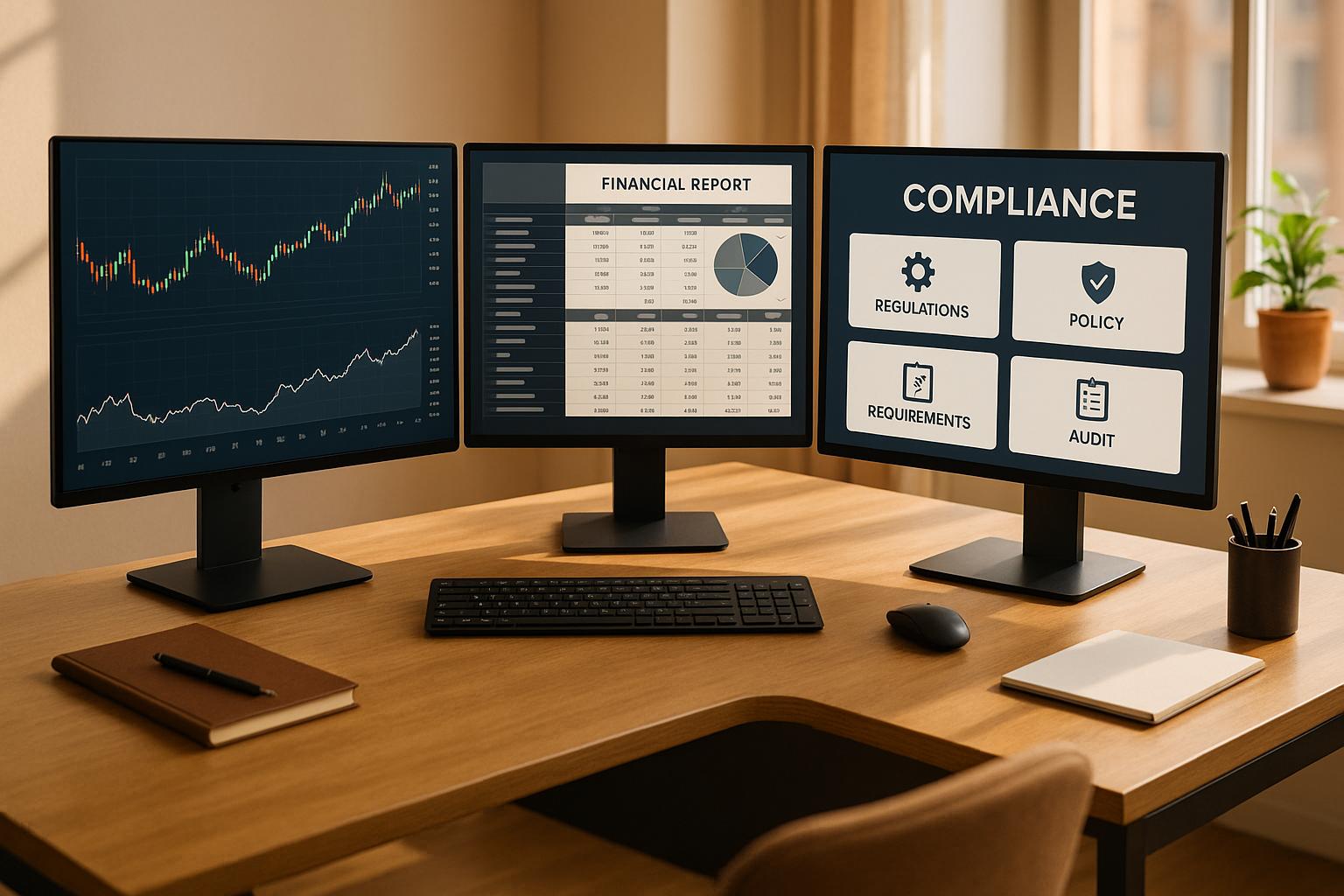
Post-investment monitoring is essential for maximising returns and reducing risks in venture capital, private equity, and alternative investments. After a deal closes, investors must actively track portfolio companies to ensure alignment with goals, identify potential issues early, and prepare for successful exits. This process includes financial performance analysis, governance checks, regulatory compliance, and ESG tracking.
Key takeaways:
- Track financial performance: Metrics like IRR, TVPI, EBITDA, and cash burn are critical for assessing progress.
- Governance oversight: Active board involvement and standardised reporting reduce risks and improve decision-making.
- Regulatory compliance: Adherence to FCA rules, AML checks, and GDPR is vital for UK-based firms.
- ESG monitoring: Metrics such as carbon emissions, diversity, and governance quality are increasingly important to stakeholders.
- Standardisation is key: Consistent templates and centralised systems improve data quality and reporting efficiency.
Modern tools, like Zapflow, automate data collection, streamline reporting, and enable real-time insights, making monitoring more efficient. With structured systems in place, investment teams can focus on value creation, risk management, and preparing for smoother exits.
Best practices for portfolio monitoring & reporting with Gale Wilkinson
Main Areas of Post-Investment Monitoring
Post-investment monitoring involves four closely connected areas that collectively provide a comprehensive view of portfolio performance. These include governance, financial and operational performance tracking, risk and compliance management, and ESG (Environmental, Social, and Governance) and impact monitoring. Together, they ensure investments align with objectives while safeguarding against potential risks. These areas are interdependent - strong governance enhances financial reporting, while solid compliance frameworks support credible ESG disclosures.
Many firms now integrate all four areas into a cohesive monitoring framework, often supported by technology platforms. Such platforms standardise data collection and reporting, enabling investment committees to review governance updates, financial KPIs, compliance status, and ESG progress in one centralised location. This approach eliminates the inefficiency of managing multiple spreadsheets and email threads, streamlining oversight and decision-making processes.
Governance and Reporting Standards
Governance plays a critical role from the moment a deal closes. Investors often secure board seats, observer rights, and clear information-sharing agreements. These arrangements establish a foundation for ongoing oversight, allowing investors to monitor performance and intervene when necessary.
Having a presence on the board provides direct insight into strategic decisions, operational hurdles, and management quality. Active participation can help identify early warning signs - such as strained customer relationships or internal disputes - that might not surface in financial reports for months. Where full board seats are unavailable, observer rights still allow investors to stay informed without formal voting authority.
Reporting schedules typically include monthly updates for complex or rapidly growing businesses, quarterly board packs and investor updates for all portfolio companies, and annual audited financial statements. Consistent and accurate reporting is essential for effective monitoring. Variations in formats, definitions, or reporting timelines can complicate data aggregation and analysis. To address this, many firms provide standardised templates and data taxonomies, making it easier to benchmark companies and identify areas needing attention.
Tools like Zapflow simplify governance by centralising documents, automating report collection, and offering dashboards to track submissions. This reduces administrative tasks, freeing up investment teams to focus on analysis.
At the fund level, managers follow a similar cadence with quarterly LP reports and an annual report. These documents consolidate portfolio data, highlight fund-level metrics like IRR and TVPI, and demonstrate active management. The UK Stewardship Code underscores the importance of using governance insights to drive better outcomes, not just to collect data.
Financial and Operational KPIs
Financial KPIs are the cornerstone of performance monitoring, offering insights into growth, profitability, and sustainability. Key metrics include revenue, revenue growth, gross margin, EBITDA, operating cash flow, cash burn, and capital expenditure. For private equity buyouts, leverage ratios and covenant headroom are critical, while for VC-backed technology firms, metrics like annual recurring revenue (ARR) and net revenue retention take precedence.
Tracking begins with establishing baseline metrics tied to the investment thesis and value-creation plan. For example, a sudden drop in gross margin from 75% to 65% over two quarters signals a potential issue, such as rising costs or pricing pressures, that requires immediate attention. Without consistent monitoring, such trends can escalate into serious problems.
Operational KPIs complement financial metrics by measuring efficiency. Common indicators include customer acquisition cost (CAC), churn rates, lifetime value (LTV), and productivity per employee. For SaaS companies, metrics like ARR growth, churn, and engagement levels are particularly relevant. Standardising KPI definitions across the portfolio ensures meaningful comparisons. For instance, if one company defines "active users" as those logging in within 30 days and another uses a 90-day window, the metrics become incomparable.
A well-structured KPI framework focuses on 8–15 core metrics per company, with clear targets and thresholds. Early-warning triggers, such as net revenue retention dropping below 100% or a cash runway falling under nine months, prompt immediate reviews and action plans.
Technology platforms enable real-time KPI tracking, flagging anomalies and allowing teams to act before quarterly board meetings. This proactive approach helps address issues like deteriorating unit economics or rising customer acquisition costs as they emerge, improving outcomes.
Risk, Compliance, and KYC/AML Monitoring
Monitoring risk and compliance is essential to protect both the portfolio and the fund from regulatory breaches, financial penalties, and reputational harm. For UK and EU-focused investors, this includes compliance with KYC (Know Your Customer), AML (Anti-Money Laundering), sanctions screening, GDPR, and sector-specific regulations.
Post-investment, firms must regularly refresh KYC data on key shareholders and directors, monitor ownership changes, and rescreen high-risk counterparties and customers. For example, adding a major new client or entering a new market may require additional compliance checks.
The Financial Conduct Authority (FCA) mandates robust systems for UK-regulated fund managers, including thorough risk assessments, monitoring logs, and documentation of compliance breaches and remedial actions. Firms must maintain clear records of oversight activities, ready to provide evidence to regulators or LPs when required.
Many firms now use automated compliance systems to manage alerts and logs. For example, if a portfolio company’s cash balance falls below a set threshold, the system flags the issue and records the alert, reducing manual effort and minimising oversights.
Beyond regulatory compliance, monitoring should extend to strategic, operational, financial, cyber, legal, and reputational risks. Practical measures include quarterly risk registers, scenario analyses, stress tests, and insurance reviews. Firms often consolidate this information into a risk dashboard, providing an aggregated view for investment committees and LPs.
Platforms like Zapflow centralise risk management, linking incidents, actions, and outcomes. For instance, a cybersecurity incident report can be stored alongside remediation steps, board minutes, and LP updates, ensuring a comprehensive and integrated approach to risk management.
To maintain objectivity, some firms designate a compliance officer or engage external specialists for periodic reviews, ensuring independence and thoroughness in their monitoring efforts.
ESG and Impact Monitoring
Incorporating ESG (Environmental, Social, and Governance) monitoring has become a critical part of post-investment oversight for UK and European managers. This shift is largely driven by frameworks like SFDR, the UK Stewardship Code 2020, TCFD, and CSRD. Today, limited partners (LPs) demand standardised ESG reporting, while buyers scrutinise ESG credentials during exit due diligence.
A strong ESG framework goes beyond financial and governance monitoring, offering a more comprehensive view of portfolio performance. For managers in the UK and Europe, post-investment ESG efforts typically involve several steps: conducting baseline assessments, analysing materiality, setting targets, crafting action plans, collecting ongoing KPIs, engaging with portfolio companies, and reporting to LPs and regulators. Together, these steps ensure a clear understanding of portfolio risks and opportunities.
With regulatory requirements firmly in place, having accurate and relevant metrics is essential for effective ESG oversight.
ESG Metrics and Impact Indicators
Tracking the right metrics is key to measuring ESG performance. These metrics are often aligned with established frameworks like GRI, SASB, TCFD, and EDCI.
- Environmental metrics include greenhouse gas emissions (Scope 1, 2, and increasingly Scope 3), energy use and intensity, renewable energy adoption, waste management, water consumption, and climate risk exposure. For Article 8 and 9 funds under the EU's SFDR, reporting on specific adverse impact indicators is mandatory. Evaluating alignment with net-zero goals, especially for energy-intensive sectors, is also a growing focus.
- Social metrics cover areas like workforce diversity (gender and ethnicity), pay equity, health and safety performance (e.g., lost-time incident rates), employee turnover, training efforts, unionisation, and compliance with human rights and labour standards in the supply chain.
- Governance metrics assess factors such as board independence and diversity, separation of chair and CEO roles, anti-corruption measures, cybersecurity protocols, whistle-blowing mechanisms, and ESG oversight at the board level. The UK Stewardship Code 2020 encourages integrating ESG considerations throughout the investment lifecycle.
Impact indicators, such as the amount of CO₂ avoided or the number of underserved customers reached, should align with frameworks like the UN Sustainable Development Goals or IRIS+. Many European managers are now adopting a double materiality approach, assessing both how ESG factors impact a company financially and their broader societal and environmental effects, as outlined by CSRD and European Sustainability Reporting Standards.
Standardising ESG reporting is crucial for meaningful comparisons across portfolio companies. Investment firms should implement consistent templates that define which metrics to collect, how to calculate them, and how often to report. Automating data collection through integrations with accounting, HR, and operational systems can improve accuracy and reduce delays. A centralised dashboard consolidating ESG data from all portfolio companies enables real-time insights and thorough analysis.
A recent survey of European private equity managers revealed that over 80% collect ESG data annually, with more than half reviewing material ESG issues quarterly. Tools like Zapflow enhance this process by offering custom ESG surveys, centralising data, and providing real-time analytics and reporting capabilities.
Creating and Tracking ESG Action Plans
Within the first 100 days post-deal, firms should agree on ESG action plans based on an initial assessment of risks, opportunities, and compliance gaps. These plans should include measurable objectives that align with both the investment strategy and the portfolio company’s priorities. Clear ownership, timelines, and resource allocation are essential for success.
Developing these plans should be a collaborative effort between the investment firm and the portfolio company’s management team. Objectives might include reducing emissions, improving board diversity, implementing energy efficiency measures, or strengthening cybersecurity. Each goal should have a designated owner, a clear timeline, and sufficient resources to ensure progress.
Regular reviews - conducted quarterly or bi-annually - help monitor progress, address challenges, and adjust targets if needed. Using standardised documentation across the portfolio allows for comparisons, identifies best practices, and ensures consistent reporting. Maintaining open communication between the investment firm and portfolio company leadership is equally important to stay aligned and provide strategic guidance.
Technology can play a significant role here. Platforms like Zapflow help schedule reminders for data submissions, track action plan progress, and generate analytics for LPs. Features like real-time updates, document sharing, and team collaboration streamline the entire process.
Using ESG Data in Investment Decisions
ESG progress should be integrated into regular reviews, whether quarterly or annually, to assess performance against benchmarks. Teams should evaluate whether ESG improvements are leading to tangible benefits like cost savings, better risk management, or new revenue opportunities.
When it comes to valuations, ESG factors are increasingly critical. Research from MSCI shows that companies with strong ESG profiles often enjoy lower capital costs and reduced earnings volatility. Firms with solid ESG performance typically face lower risk premiums, while those with significant ESG challenges may see valuation discounts. Additionally, credible ESG improvements and transition plans can positively influence exit multiples and attract more interest from buyers.
As companies near exit, demonstrating strong ESG credentials becomes even more important. Buyers are now conducting detailed ESG due diligence, favouring firms with transparent reporting and measurable impact. Highlighting documented ESG improvements and impact metrics in exit materials can help justify premium valuations. Maintaining an "ESG data room" with policies, KPIs, audit reports, and action-plan updates can also simplify the due diligence process.
A 2022 PwC study projected that ESG-labelled assets in Europe could reach €7.6 trillion by 2025, accounting for approximately 60% of total European fund assets.
sbb-itb-d63e044
Processes and Tools for Monitoring
Effective post-investment monitoring demands careful planning, structured systems, and the right technology to turn raw data into actionable insights. Relying on fragmented tools or manual workflows often leads to inefficiencies and missed opportunities. The key is to establish a solid framework before deals are finalised and use technology to handle repetitive tasks, while leaving room for human judgement to guide strategic decisions. Here’s how to set up frameworks, leverage technology, and standardise data collection for optimal results.
Setting Up Monitoring Frameworks Before Investment
Monitoring starts before the ink dries on a deal. By creating a framework during the investment phase, you ensure that metrics, reporting structures, and key performance indicators (KPIs) align with your investment goals and due diligence findings. These initial metrics serve as the foundation for ongoing evaluation.
For example, if you're investing in a SaaS company with a focus on rapid customer growth, metrics like monthly recurring revenue, customer acquisition cost, and churn rate become critical benchmarks. These help track progress from the outset and throughout the holding period.
The frequency of monitoring depends on the company's growth stage and risk profile. High-growth companies often need monthly tracking to capture fast-moving changes and address risks early. Mature businesses nearing exit may shift to quarterly reviews, focusing on financial health and strategic priorities, while stable firms might only require annual comprehensive assessments.
Using standardised templates across portfolio companies simplifies data collection. These templates should clearly outline which metrics to track, how they’re calculated, and the format for reporting. For instance, specify whether revenue should be reported on a cash or accrual basis, or if customer counts should include only paying users. Clear definitions prevent misunderstandings and ensure consistency.
Governance structures and escalation procedures are equally important. Define who receives reports, how often they’re shared, and what actions are triggered by performance deviations. By setting these protocols early, you create a system that allows for quick, coordinated responses when challenges arise. These early efforts also make it easier to integrate technology later, enabling real-time monitoring and decision-making.
Using Technology for Monitoring
Once a framework is in place, technology can take over the heavy lifting. Modern platforms have revolutionised post-investment monitoring by automating data collection and analysis, saving time and improving accuracy. For example, users of Zapflow report saving more than 200 hours on routine tasks, allowing investment teams to focus on strategic decision-making instead of administrative work.
Real-time analytics tools provide continuous visibility into portfolio performance, enabling teams to spot trends and act quickly. Instead of waiting for periodic updates, you can monitor developments like equity issuances, valuation changes, and funding rounds as they happen.
Automation plays a key role here. By integrating with existing systems like CRM, accounting, and ERP platforms, data flows seamlessly into your monitoring tools. This reduces delays, improves accuracy, and eliminates the need for manual data entry.
Advanced reporting features also enhance communication with stakeholders. Clear, visually optimised reports make it easier to convey complex information to internal teams and limited partners. Custom surveys, such as those focusing on ESG metrics, ensure consistent and relevant data collection.
"Managing the deal flow in Excel was a nightmare and we are happy that all our deals are all now in Zapflow." - William Cardwell, Courage Ventures
"Zapflow is one of the key tools we use in our day-to-day work. It enables us to do everything from deal flow tracking to portfolio reporting." - Cyril Vancura, imec.xpand
Collaboration features within these platforms allow team members to share updates, comments, and documents effortlessly. Activity tracking and permission-based access ensure transparency while safeguarding sensitive information. This collaborative environment captures valuable insights from board meetings, management discussions, and site visits, making them accessible to the entire team.
Technology also simplifies compliance tasks. Automated checks for KYC/AML requirements and adherence to standards like ISO 27001, GDPR, and SOC 2 help maintain data integrity and build trust when handling sensitive information.
Standardising Data Capture and Reporting
Automation is just the first step - standardisation takes data quality and comparability to the next level. A unified approach to data collection ensures consistency across portfolio companies, making it easier to compare performance and streamline reporting to limited partners.
Start by defining clear data standards. Specify how metrics like revenue, burn rate, and customer acquisition cost are calculated so that every portfolio company follows the same methodology. This consistency is crucial for evaluating performance and demonstrating responsible capital management.
For companies with fewer resources, provide simple reporting templates that map their existing metrics to your standardised KPIs. A strong data governance policy should outline data ownership, quality standards, and validation processes. Regular validation checks and audit trails ensure that the data feeding your dashboards is both reliable and actionable.
Centralised dashboards bring all portfolio data together in one place, offering real-time insights and enabling thorough analysis. These dashboards can highlight outliers, such as a company with unusually high customer acquisition costs compared to its peers, prompting a deeper review.
While quantitative data is essential, it should be complemented by qualitative insights. Standardised templates can help capture context from management discussions, such as market conditions or team dynamics, which numbers alone might not reveal.
Regular performance reviews, whether monthly or quarterly, keep monitoring aligned with broader goals. Variance analysis - comparing actual results to forecasts - can uncover overperformance or underperformance, guiding decisions like leadership changes, additional funding, or restructuring.
When done consistently, effective monitoring becomes a long-term asset. Much like compound interest, the benefits grow over time, often becoming most apparent after years of disciplined tracking and analysis. Firms that prioritise structured, consistent monitoring tend to achieve better outcomes than those that treat it as an afterthought.
Preparing for Exit with Monitoring Data
Planning for an exit starts the moment an investment is made, and the monitoring data collected during this period lays the groundwork for a smooth and successful exit. The quality of your monitoring records can significantly impact valuation, the speed of the deal, and the likelihood of completion. Companies with well-maintained and consistent data often face shorter due diligence processes, fewer challenges over warranties, and fewer disputes over working capital or completion accounts. By following standardised KPI tracking and maintaining high data quality from the outset, businesses can streamline their transition into the exit phase.
Using Monitoring Data to Increase Exit Value
Historical monitoring data transforms the exit process into an evidence-based story. Buyers want to see not just the numbers but also the trajectory and the rationale behind it. Well-organised monitoring records provide clear insights into revenue trends, margin performance, cohort results, and cash efficiency, all of which directly influence valuation and price negotiations.
Key metrics include revenue and margin trends, unit economics, cash efficiency, valuation history, and financially material ESG factors. These should be tracked consistently in GBP for UK-focused investors, with clear definitions throughout the investment period. Using standardised monitoring templates - ideally integrated into tools like Zapflow - makes it easy to generate time-series charts that can be directly incorporated into information memoranda or buyer models.
Quarterly dashboards offer a tangible record of meeting or exceeding budgets, complete with commentary on any deviations and corrective actions. They also help illustrate the cause-and-effect relationship between strategic initiatives, such as product launches or salesforce expansions, and changes in KPIs like win rates or acquisition costs.
ESG monitoring has become increasingly important in driving higher exit values. It achieves this in three ways:
- Reducing risk discounts: Demonstrating strong ESG practices can lower perceived risks, allowing buyers to justify higher valuations.
- Attracting more bidders: Many UK and EU buyers, including private equity funds, now require minimum ESG standards or alignment with SFDR mandates.
- Highlighting financial benefits: Investments in ESG can lead to tangible results, such as lower energy costs or improved tender win rates due to strong ESG credentials.
To maximise the value of monitoring data, create an "exit narrative pack." This should include a timeline of major decisions and initiatives, overlaid with KPI charts, selected board slides, and updates on ESG actions. Such a pack showcases how risks have been mitigated over time, whether through diversifying customer bases, improving compliance, or reducing incident rates.
Preparing Exit-Ready Documentation
When preparing for an exit, having well-organised documentation is crucial. Clean, consistent data can significantly reduce the time needed for due diligence. Essential documents and datasets fall into several key categories:
- Financial packs: Include monthly or quarterly profit and loss statements, balance sheets, cash flow statements, budget versus actuals, KPI dashboards, revenue and margin analyses, and unit economic breakdowns. Ensure all figures are formatted in GBP, with dates in dd/mm/yyyy format.
- Governance and corporate records: Include board and committee minutes, shareholder agreements, option and incentive schemes, cap table history, and filings with Companies House.
- Commercial and operational data: Provide analyses of customer and supplier concentration, pipeline and conversion data, pricing history, and operational service level agreements (SLAs).
- Risk, legal, and compliance logs: Cover KYC/AML records, regulatory filings, incident registers, internal audits, and information security documentation.
- ESG and impact materials: Include ESG policies, KPIs, action plans, progress reports, and any external assurance documentation.
Storing these documents in a structured repository ensures they can be quickly uploaded to a virtual data room when the sale process begins. Centralising data - such as deal information, KPIs, and governance records - makes it easier to create buyer-ready views, saving valuable time during preparation.
Investment teams should also conduct annual exit-readiness reviews, looking at the company through the lens of a buyer's due diligence process. These reviews should include:
- A valuation and performance review, comparing metrics against peer benchmarks and recent UK/EU transactions.
- A data quality audit, identifying gaps in key KPIs, contracts, HR records, and ESG data.
- A risk and red-flag session, using compliance logs to pinpoint potential buyer concerns.
- An action plan, assigning owners and deadlines to address identified issues.
Running these reviews 12–24 months before a planned exit provides ample time to address weaknesses and strengthen the company’s performance record.
Learning from Exits and Improving Processes
Each exit is an opportunity to refine your monitoring approach. After a deal closes, conduct a structured post-exit review, using monitoring data and buyer feedback as key inputs. This helps ensure lessons learned are incorporated into firm-wide playbooks, reporting templates, and technology systems.
Engage with advisers and buyers to understand what aspects of the data and narrative were most effective, where friction occurred, and which areas of due diligence attracted the most scrutiny. Compare the initial investment thesis and monitoring priorities with the actual value drivers that influenced the buyer’s decisions. Document any bottlenecks in the process and translate them into updated standards for future exits. These insights should feed back into monitoring templates and frameworks.
Measure the effectiveness of your monitoring process with indicators such as:
- Time taken to prepare a data room
- Number of buyer queries about missing or inconsistent data
- Frequency of price adjustments due to data gaps
- Feedback scores from buyers or advisers on data quality
Over time, these metrics will reveal whether your monitoring practices are genuinely supporting the exit process or creating unnecessary administrative burdens.
Transparent reporting on outcomes - even when deals don’t succeed - can enhance credibility with stakeholders. This, in turn, strengthens the firm’s reputation in the market, indirectly benefiting future exits. By continuously refining monitoring practices, you create a cycle of improvement that supports long-term success.
Conclusion
Monitoring, when approached thoughtfully, plays a crucial role at every stage of the investment process. It's not just about keeping track - it's about creating value, mitigating risks, and staying ahead in a competitive field.
Post-investment monitoring isn't a task to be left to chance. By treating it as a structured and deliberate process, investment teams can spot opportunities and challenges earlier, allocate resources more effectively, and ultimately gain an edge over competitors. Once the deal is closed, the relationship between investor and company truly begins, and the strength of this partnership - founded on solid data and open communication - is what drives performance tracking, risk management, and readiness for exit.
A comprehensive monitoring framework should encompass governance standards, financial and operational KPIs, risk and compliance checks, and ESG metrics. This broad approach ensures investment professionals get a full picture of a portfolio company's health. Standardising these processes allows for clearer benchmarking and more accurate reporting.
Technology has shifted monitoring from a manual chore to an integral, automated part of investment management. Tools like real-time dashboards and integrated platforms streamline data collection, reporting, and compliance, enabling quicker decisions and reducing the administrative burden. Platforms such as Zapflow, already used by over 1,500 professionals across 30 countries, demonstrate how technology can simplify workflows, replacing fragmented tools and spreadsheets. This shift frees up time for deeper analysis and value creation, with users collectively closing deals worth over £40 billion and saving countless hours.
High-quality monitoring data doesn't just make day-to-day management easier - it also lays the groundwork for smoother due diligence and more successful exits. A reliable record of financial performance, ESG initiatives, and governance practices gives buyers or IPO investors the confidence they need. ESG improvements, in particular, have become a key focus, as sustainability and governance are now critical factors for many strategic buyers and institutional investors. Consistent monitoring helps firms address risks early, achieve better valuations, and streamline the sale process.
The best monitoring starts at the beginning, with clear KPIs, reporting schedules, and data standards agreed upon during the investment phase. By setting expectations early, firms ensure consistent data quality throughout the holding period, avoiding last-minute scrambles to piece together historical performance for exits or LP queries.
Each exit provides a learning opportunity. Post-exit reviews allow firms to evaluate what worked, what didn’t, and why. These lessons can then be incorporated into firm-wide practices, templates, and systems, creating a feedback loop that drives continuous improvement over time.
For UK and European investment teams, robust monitoring also aligns with regulatory requirements, such as UK GAAP and FCA guidelines. Transparent reporting, supported by structured data and clearly documented processes, has become a baseline expectation for fundraising and maintaining LP trust. Using UK-specific conventions for currency, dates, and reporting demonstrates professionalism and attention to detail.
The move from periodic checks to continuous, often automated oversight is gathering pace. Real-time compliance tools integrate multiple data sources, perform pre- and post-trade checks, and reduce manual errors, helping firms stay compliant with evolving regulations. As the complexity of data and regulatory demands grows, those investing in systematic, technology-driven monitoring will be better equipped to protect returns, support their portfolio companies, and deliver reliable outcomes for stakeholders.
FAQs
What are the key differences in post-investment monitoring between venture capital and private equity?
Post-investment monitoring varies greatly between venture capital and private equity, reflecting their unique goals and strategies.
In venture capital, the approach is often hands-on and centred on growth. This can include offering strategic advice, mentoring founders, and proactively identifying risks to support the company’s development. The focus here is more qualitative, aiming to nurture innovation and adaptability within the portfolio companies.
On the other hand, private equity takes a more structured, data-focused approach. Monitoring typically involves in-depth financial analysis, streamlining operations, and implementing long-term strategies to drive value. There’s a stronger emphasis on control and achieving clear, measurable performance milestones.
In short, venture capital thrives on flexibility and fostering innovation, while private equity zeroes in on operational improvements and maximising financial outcomes.
How can technology improve the efficiency of post-investment monitoring?
Technology has become essential in making post-investment monitoring more efficient and straightforward. Tools like Zapflow offer solutions for portfolio management, reporting, CRM, and compliance, enabling investment professionals to optimise their workflows and prioritise strategic decisions.
With features that deliver real-time insights and centralise critical processes, these platforms help investment teams track performance, work together effortlessly, and stay compliant without unnecessary hassle.
Why is ESG monitoring becoming more important in post-investment oversight, and how does it affect exit valuations?
Investors are paying closer attention to ESG (Environmental, Social, and Governance) monitoring as part of post-investment oversight. Why? It ensures businesses operate responsibly, minimise risks, and adopt practices that align with long-term sustainability goals. Companies with strong ESG performance are becoming more attractive to investors who value ethical and forward-looking business models.
Managing ESG factors effectively can also have a big impact on a company’s valuation when it’s time to exit. A solid ESG strategy can boost a company’s reputation, draw in ethical investors, and limit potential liabilities. Firms with strong ESG credentials are often seen as more resilient and better prepared for the future, which can result in higher valuations during exit negotiations.